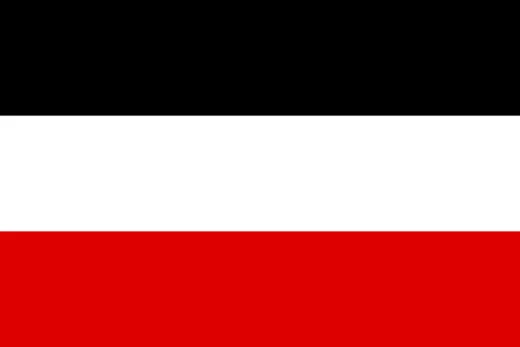
German Empire
German state from 1871 unification to 1918 revolution.

Wikipedia / Wikimedia Commons
The German Empire (German: Deutsches Reich), also referred to as Imperial Germany or the Second Reich, was the period of the German Reich from the unification of Germany in 1871 until the November Revolution in 1918, when Germany changed its form of government to a republic. It consisted of 26 states, each with its own nobility, and was dominated by Prussia, which contained about two-thirds of the Empire's population and territory. The King of Prussia was also the German Emperor.
- born
- 18 January 1871
- died
- November 1918
- field
- State, empire
- nationality
- German
- known_for
- Industrial, technological, and scientific power; largest economy in continental Europe by 1913; world's strongest army; second-largest navy by the early 1910s; third-largest colonial empire
Lore & Background
The German Empire was founded on 18 January 1871, when the south German states of Bavaria, Württemberg, Baden, and Hesse-Darmstadt joined the North German Confederation. The new constitution came into force on 16 April, introducing the title of German Emperor for Wilhelm I, King of Prussia from the House of Hohenzollern. Berlin remained its capital, and Otto von Bismarck, Minister President of Prussia, became chancellor. During its 47 years of existence, the German Empire became an industrial, technological, and scientific power in Europe, and by 1913, Germany was the largest economy in continental Europe and the third largest in the world. One-third of all Nobel Prizes went to German inventors and researchers. Germany built Europe's most extensive rail network, the world's strongest army, and a fast-growing industrial base. Starting very small in 1871, the navy grew to become the second largest in the world by the early 1910s, second only to Britain's Royal Navy.
Reader's Guide
The German Empire's significance lies in its rapid rise as a major European power and its role in the outbreak of the First World War. Otto von Bismarck served as the first and longest-tenured chancellor from 1871 to 1890, pursuing conservative domestic policies and a complex alliance system, including the Dual Alliance with Austria-Hungary and the Triple Alliance with Italy. After Bismarck's dismissal in 1890, Wilhelm II pursued Weltpolitik, a more aggressive and expansionist course that abandoned Bismarck's alliance system, leaving Germany increasingly isolated. The July Crisis of 1914 escalated into the First World War, where German plans to capture Paris quickly failed, and the war on the Western Front became a stalemate. The Allied naval blockade caused severe shortages. Germany had success on the Eastern Front, occupying territory after the Treaty of Brest-Litovsk. The declaration of unrestricted submarine warfare in early 1917 contributed to bringing the United States into the war. The empire collapsed in the November 1918 Revolution with the abdication of Wilhelm II. The Treaty of Versailles imposed heavy reparations and military restrictions, and the resulting economic devastation and humiliation are considered leading factors in the rise of Adolf Hitler and Nazism.
Did You Know?
- The German Empire consisted of 26 states, including four kingdoms, six grand duchies, five duchies, seven principalities, three free Hanseatic cities, and one imperial territory.
- Prussia contained about two-thirds of the Empire's population and territory, and the King of Prussia was also the German Emperor.
- By 1913, Germany was the largest economy in continental Europe and the third largest in the world.
- One-third of all Nobel Prizes went to German inventors and researchers during the empire's existence.
More in German Empire 1-24
Spotted an error? Know more?
This is a living reference — every entry is fact-audited, and reader corrections feed straight into our audit queue. Suggest an edit · See this site's audit record